
The Future of African Cities
A New Vision for African Cities
8 September 2026,
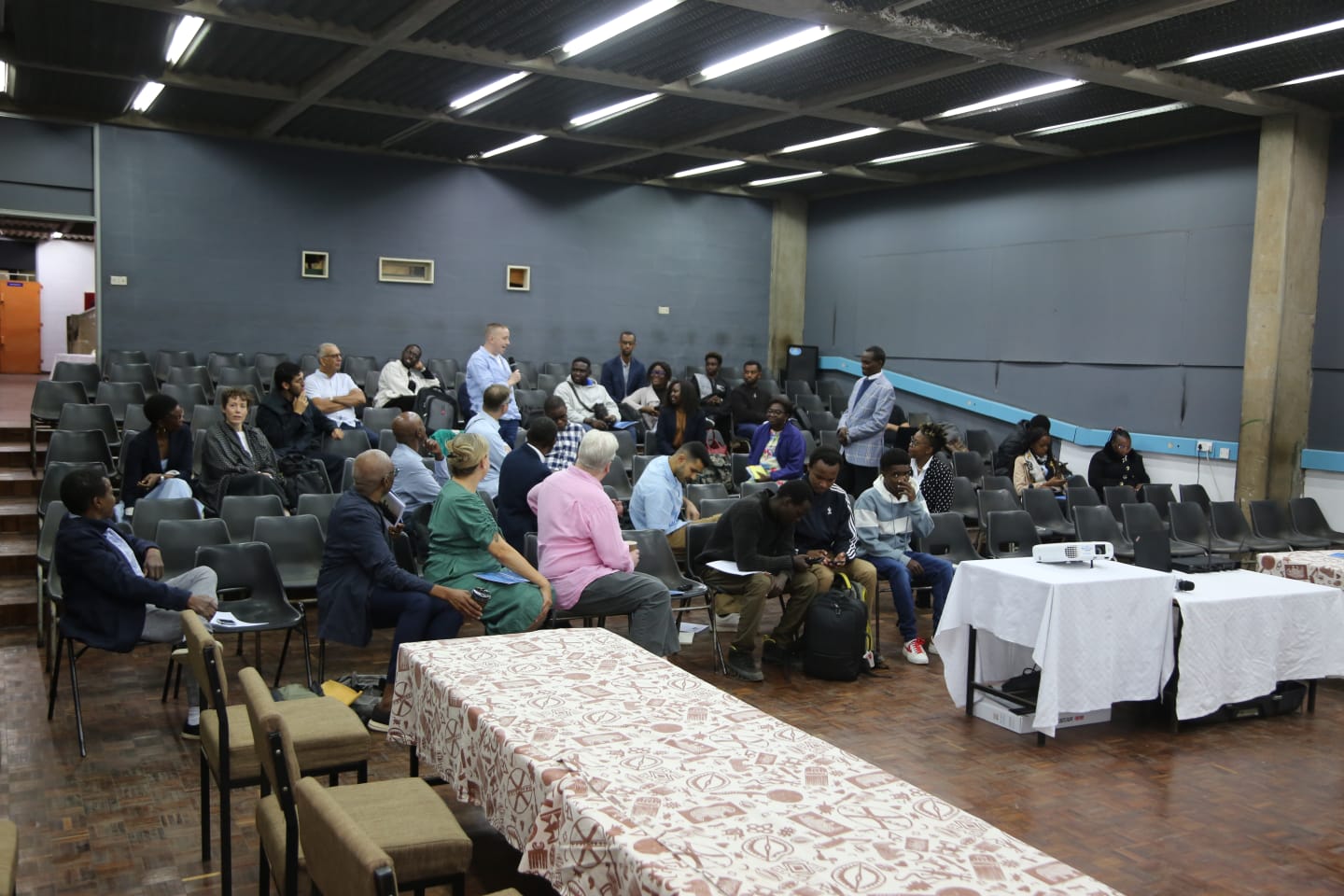
The Faculty of Built Environment and Design, through the Department of Architecture, in collaboration with the African Architectural and Urban History Network (AFRAUHN), hosted the second biennial AFRAUHN Conference from 8th -10th September 2026. The three-day conference brought together scholars, architects, researchers, educators and students to examine Africa’s architectural and urban histories and their implications for the continent’s future.
The conference provided a platform for critical conversations on emerging discourses in African architectural and urban practices and was held in conjunction with the inaugural Pan-African Biennale of Architecture in Nairobi.
Re-centering African Knowledge in Architecture and Urban Development
Officially opening the conference, Dean
Faculty of Built Environment and Design, Prof. Owiti A. K’Akumu, representing the Vice-Chancellor, Prof. Eng. Ayub N. Gitau, welcomed participants to the University and expressed hope that the deliberations would generate ideas capable of informing architectural education, research and practice.
Prof. Gitau noted that the gathering came at an important time for Africa, characterised by rapid urbanisation, demographic change, climate pressures and changing patterns of settlement. He challenged participants to reflect on whose knowledge informs the African city, whose histories shape the understanding of African architecture, and how the built environment can remain responsive to the identities, cultures and aspirations of African communities.
He emphasised the importance of recognising indigenous knowledge as a source of contemporary architectural thought, noting that traditional architecture should not simply be viewed as heritage frozen in the past. Indigenous construction knowledge, ecological adaptation, material intelligence and collective spatial memory, he observed, can provide foundations for new architectural possibilities.
These sentiments were reflected in the conference discussions on “Reclaiming Regional Identity in Kenyan Architecture,” which examined vernacular knowledge systems, indigenous construction practices and spatial traditions as valuable sources of knowledge for contemporary design.
Rethinking Architectural Education in Africa
The conference also interrogated the state of architectural education in Africa, particularly the influence of inherited Euro-American academic systems. Participants examined how curricula, studio culture, accreditation standards and research practices could better respond to African realities, including informality, climate vulnerability, hybrid land systems and postcolonial spatial inequalities.
Prof. Robert Rukwaro observed that the conference provided an opportunity to reflect on Africa’s urban past while engaging with the challenges and opportunities shaping its future. He emphasised that architecture and urbanism must remain connected to the histories and cultures of African communities and contribute meaningfully to the continent’s development.
Dr. Linda Nkatha Gichuyia, Lecturer in the Department of Architecture and a member of the AFRAUHN Scientific Committee, welcomed participants and introduced the AFRAUHN team. She noted that the network was established in 2020 to create a platform for research, writing and intellectual exchange around African architectural and urban history.
AFRAUHN seeks to promote, support, develop and disseminate high-quality research on the architectural and urban history of Africa and its diaspora, while examining its connections to cultural practices, socio-economic conditions, material traditions, building techniques, environmental factors, gender and identity politics.
Broadening the Documentation of African Architectural History
A key theme throughout the conference was the need to broaden how African architectural history is documented and understood. Discussions on “Writing African Architectural History” and “Reframing the Foundations for Considering the Historiographies of African Architecture and Urbanism” explored the limitations of conventional archives and established narratives.
Participants considered buildings, landscapes, oral histories, indigenous technologies and community practices as important repositories of knowledge that can contribute to a more inclusive understanding of Africa’s architectural and urban history.
Climate-responsive design also featured prominently during the conference, with participants questioning the decline of tropical architecture at a time when African cities face growing environmental pressures. Discussions highlighted approaches such as natural cooling, daylighting, appropriate materials and locally grounded construction technologies as important considerations for sustainable architectural practice.
Examining Colonial Legacies and the East African Built Environment
The conference further examined the coloniality of architecture and the East African built environment, exploring how imperialism, colonial systems, trade networks, land relations and infrastructure have shaped the region’s architectural and urban landscapes.
In his remarks, Prof. Gitau called on participants to go beyond simply describing African architecture and instead question inherited narratives, recover neglected knowledge, strengthen intellectual networks and imagine African cities from within African realities.
Strengthening Collaboration and Scholarship
The conference brought together an international community of scholars and practitioners and was supported by the Pan-African Biennale of Architecture, Architectural Association of Kenya, Campus Innovation Laboratory at the University of the Witwatersrand, Department of Art History at the University of Delaware, Liverpool School of Architecture, and The Bartlett School of Architecture at University College London.
The three-day conference concluded with discussions on design research in African architectural and urban history and the future of AFRAUHN. The discussions reinforced the need for continued collaboration, research and scholarship that place African histories, knowledge systems and lived realities at the centre of conversations on the continent’s built environment.
Through AFRAUHN 2026, the Faculty of Built Environment and Design reaffirmed its commitment to advancing architectural education, research and practice that respond to Africa’s histories, environments, cultures and contemporary development challenges.
- Log in to post comments


